2026-11-04 · Fonte:Tom's Hardware
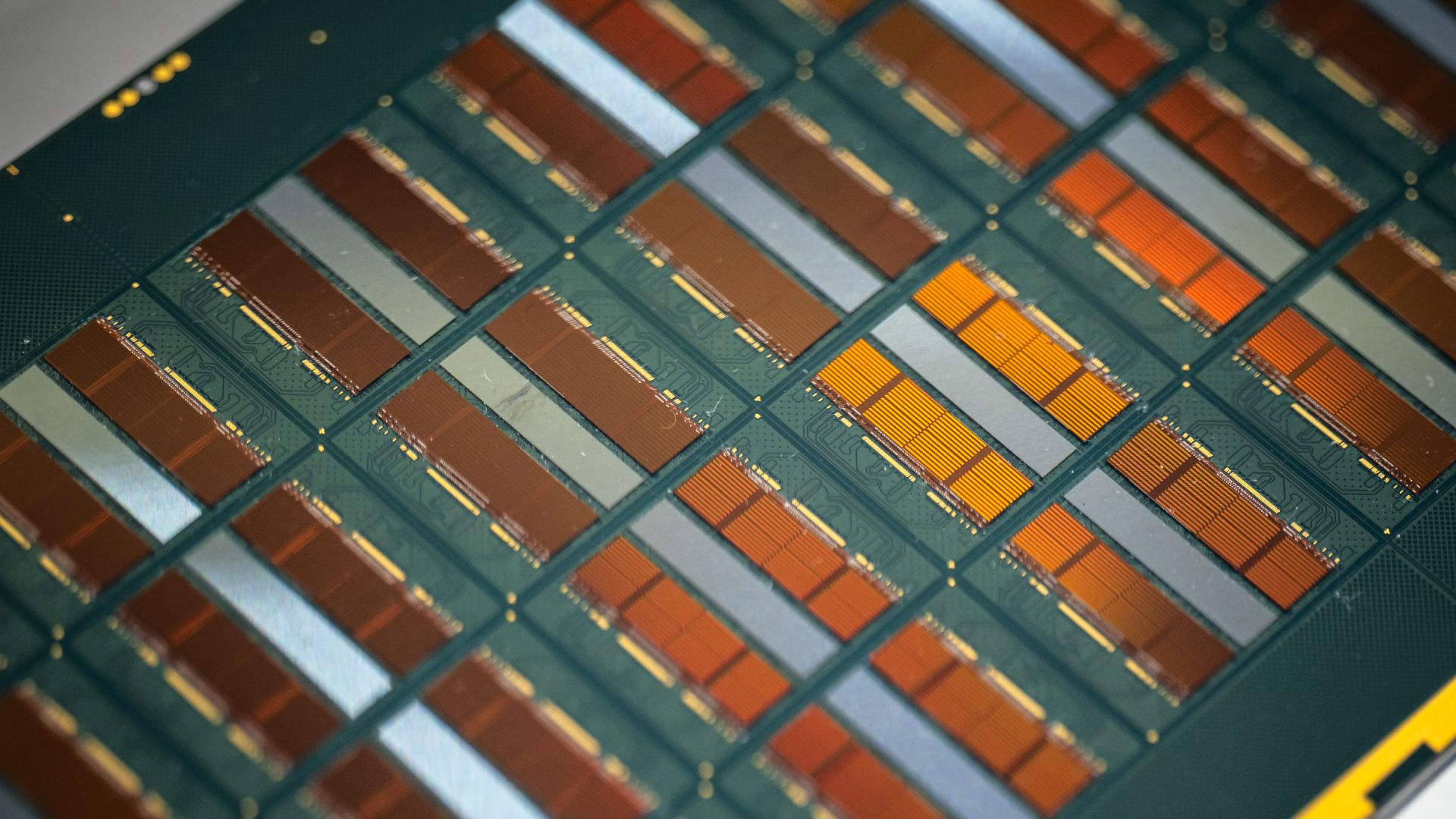
The DRAM design house debuted Sept. 16, pitching custom memory that bonds DRAM stacks directly onto processors via hybrid bonding as edge AI splits from HBM reliance.
PieceMakers, a DRAM designer backed by Nanya, started trading in Taipei on Sept. 16, and the company's public debut doubles as a statement of intent. Its founding wager runs against a prevailing assumption in AI hardware — that HBM is the natural endgame for AI inference. The company instead contends that AI inference memory won't be HBM, a contrarian position now carrying the weight of a listed company.
The technical thesis centers on integration. Rather than treating HBM as the fixed companion to AI silicon, PieceMakers builds custom memory in which a stack of DRAM is bonded directly onto the processor using hybrid bonding. On this view, edge AI devices will chart a course away from dependence on HBM — a shift that, if it plays out, would change how inference silicon and memory come paired in edge products.
For AI-compute buyers, the significance lies in potential diversification of the memory menu. A Nanya-backed DRAM designer entering public trading on Sept. 16 gives the hybrid-bonded, custom-memory route a higher profile and a listed vehicle through which the market can price its prospects. If edge inference designs no longer organize around HBM, procurement decisions for AI devices could open onto a second path alongside the established HBM-centric approach.
What to watch from here: whether hybrid bonding of DRAM stacks onto processors converts into edge AI design wins, and how quickly the predicted divergence from HBM materializes across device ecosystems. PieceMakers' Sept. 16 trading debut in Taipei now serves as a live, market-priced test of whether AI inference memory can split from the HBM path the company is betting against.
Tags: PieceMakers · Nanya · HBM · Hybrid Bonding · DRAM · Edge AI
萬安算交所 AIXX · AIXX · Exchange verificado · Ir ao mercado